Monday, December 08, 2008

Final Grade

After a journey through all four branches of Earth Science, all great things come to an end. For my final ten blogs, I believe I made a continued effort, and the grade should be based on the content. If you look back at all of my blogs, you'll notice I always included all of the data required that pertained to your questions. I think I should have a great grade, for the work I put in, but I'll leave the final decision to you.

Friday, December 05, 2008

Half a Year of Knowledge...

Over many hard, grueling, and challenging months all great things have to come to an end.. I loved this class in many ways. As for one of my finalizing blog posts (yes I know it is sad, my friends) I've decided to show to you four of my favorite Earth Science topics, that I learned about during the first semester of my 9th grade year.

Geology
This was one of the fiercest and most difficult maelstroms to complete.. I enjoyed learning the most about plate tectonics. Every day, every month, every year plates move. The plates move in many ways. Whether it be a divergent plate boundery, transform, or a convergent plate boundary, the plates will move-at extremely slow rates that we can't feel. Slowly our planet's continents moved apart from Pangea, and slowly they are coming again. Time is the only limit.

Atmosphere
I have to admit I didn't enjoy this section of Earth Science, because it proved to be my greatest nemesis... I learned quite a large sum of things from it though. My favorite part of the atmosphere was the study of cyclones and anti-cyclones. They move in opposites directions-clockwise and counter-clockwise. The are caused by opposite effects too. High pressure for anti-cyclones. Low pressure for cyclones. Anti-cyclones usually bring forth good weather, cyclones are terrors.

Oceanography
In my opinion, this was the easiest of all four.. because there was such little information. Most of it we learned in our previous middle school years, so it came relatively simple. My favorite part was the study of the ocean floor. The ocean floor is composed of many things like underwater volcanoes, abyssal plains, continental-shelfs, continental slopes...etc. I wasn't really excited about it all too much.. It was all rather boring and exhausting at all the same time.

Astronomy
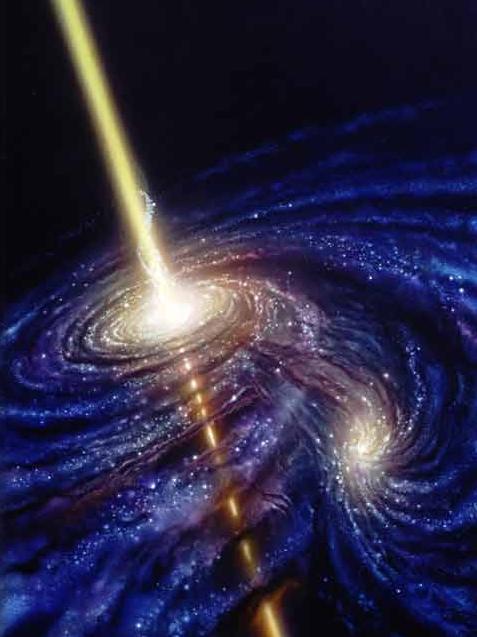
Of all four parts of Earth Science we learned, astronomy was my absolute favorite. I enjoyed learning about the other things in our universe. Our Earth is just a spec in a vast plane that seems to extend forever.. Wether we were created by an explosion of mass proportion... or just randomly appeared by a higher power.... this is our home.. and it probably will always be our home. I just hope our galaxy doesn't die out in my own lifetime... So that's the universe...

Wednesday, December 03, 2008

Hertzsprung-Russell Diagram AKA H-R Diagram


1. On an H-R Diagram, what is the main sequence?
The sequence is considered the hottest star to the coldest star.

2. What percentage of stars are main sequence stars?
Approximately 90% of all stars are main sequence stars.

3. Is the Sun a main sequence star?
Yes, the Sun is a main sequence star.


4. What will happen to the Sun next? When will this happen?
Eventually the Sun will become a Red-Giant, then go into a variable stage, then into the planetary nebula stage, then white dwarf stage, finishing at black dwarf stage. In about 4-5 billion years from now the Sun will become a red giant.

Tuesday, November 25, 2008

Stars... They Shine.. So Bright..


1. Name 10 stars.
There is the Sun, Sirius, Canopus, Rigil Kentaurus, Arcturus, Vega, Capella, Rigel, Procyon, Achernar, and Betelgeuse.

2. Choose one star. Which one did you choose?
I choose the Rigil Kentaurus star.

3. What kind of star is it?
It is a G2V + K1V spectral type of star.

4. Are there any planets that orbit this star? Tell me about them.
There is Rigil 1 and Rigil 2.
For Rigil 2 the Orbit Axis is equal to 1.19 AU
Approximate energy is recieved at the amount 1.107 Earth
This Period is considered 1.2377 years or 452.0575 days or 10849.3812 hours
The AB power in local years is: 64.57
Average day length on this planet: 22.46 hours
The year length of local days: 483.0535
Gravitational pull: 0.9 G
It's considered diameter: 6112 miles
Density: 6.21 (1.125 * Earth)
Sea-level atmospheric pressure: more!
Surface Area: 117 million square miles
Land Area: 39 million square miles
This is only some information of the star.
Rigil 1-Rockball at 0.5 AU, called "Spot"


5. What galaxy is this star a part of? This is a triple star system, the other stars known as Centauri Beta and Proxi Centauri. It is in the Centauri galaxy.

6. How far is the star from Earth? It is 270,000 AU from the Earth to the system.

Monday, November 17, 2008

The Solar System Formation and the "Big Bang Theory"


"Big Bang Theory"
Many scientists believe, that our universe was formed 13.7 or 14 billion years ago.
This belief is known as the "Big Bang Theory".This theory proposes that our universe was once extremely compact, dense, and hot. It was all the effect of a massive explosion that occurred 10 billion to 20 billion years ago. Since then, the universe has been expanding, and cooling. Several scientists found that the galaxies were actually moving away from each other showing the universe expanding in a uniform way. However the initial state of our universe was unknown. This was the explosion that brought forth our entire universe.

Solar System
Our solar system, was formed when a cloud of gases was disturbed, perhaps by the death of a star or supernova, the explosion caused the cloud of dust and gases to squeeze. Soon, the squeezing became so tight, that the cloud started to collapse, and as gravity pulled the gas and dust together, it formed a solar nebula. As the cloud had begun to collapse, it also began to spin. Soon the cloud grew denser, and much hotter at the center, with disks of gas and dust that surrounded, that was cool at the center and cool at the edges. As those disks became thinner and much more thinner, particles started sticking together forming clumps. Some of the clumps became bigger, and bigger due to more particles and clumps coming on, this began to form moons or planets. At the center of the clouds, where planets like Earth formed, only very rocky material could stand the heat. On the outer regions of the disk, icy matter settled along with rocky material forming the outer planets like Jupiter or Neptune. As this cloud continued to fall in, the center soon become so very hot that it became a star-The Sun. With this, a strong stellar wind blew out most of the dust and gases. It is believed that our solar system is 4,600 million years old, due to the recent study of asteroids.

Sunday, November 16, 2008

Stars and the Death of them.

Gamma Ray Burst (long)

We all fear something of massive proportion-the death of a star or Gamma Ray Bursts - creates gamma radiation. These are the biggest explosions since the Big Bang itself. A Gamma Ray Burst is the final stage of the death of a star. Most are at safe distances-but suppose one happened nearby-in our own galaxy. If a gamma ray bursts it will be the brightest thing in the sky-brighter then the Sun. Even at 8,000 light years away a burst in our direction would be catastrophic. When it hits it would annihilate our Ozone layer. Temperatures would severely increase. People would be severely burned from the radiation. Eventually on a molecular level-the cells would stop reproducing. The end of all life as we know it. We would all just disappear within almost one month. All that would be left would be our ruins, leaving the memory of our once powerful, and expanse humanity.


Black Holes


The Universe is a very bad place-black holes are worse. They are invisible and travel thousands of miles per hour devouring all in their wake. They are all over the Universe. Anything and everything is pulled within. Send a nuclear weapon into a black hole and nothing happens. A black hole has a enormous gravitational pull. Like gamma bursts they are results of deaths of stars. Stars in essence are neither shrinking nor expanding ,but in balance. Gravity wants to make them smaller ,but heat keeps it normal. When a star begins to cool, it can't sustain itself against the gravity. The gravity wins, and collapses the star. When the star shrinks to a single atom it creates a massive gravitational pull. It is so strong - no matter your speed you can try to get out ,but be pulled back in. Even light can't escape the massive pull. Originally we believed black holes were stationary, eventually we found out they move. If a black hole were to come upon Earth - we'd stand no chance. We'd be able to know when and how we'd die. As the black hole closes in on our planet you'd see the effects first hand at the tides. Water would wash over the continents annihilating most of us. The remaining survivors would begin to stretch and stretch. Slowly you'd be sucked away into a singularity.

Friday, November 14, 2008

A Taste of Astronomy!!


String Theory
It can only be defined as a similarity of basic mathematical models of particles and the way they interact. It is basically a theory to the question "What are we made of?" It's a very debating subject and isn't widely accepted.It basically defines four fundamentals forces within the universe which are electromagnetism, weak, strong, and gravity. This theory is actually saying that EVERYTHING has matter, even light! If the theory is accurate then our world is made of strings. They are always moving=vibrating at every moment. Our world itself is composed of pure strings.

Ultimate Fate of The Universe
Split into two ideas of our Universe's end. There is the "Endless Expansion" idea, and the "Big Crunch" idea, both showing us the end of the universe indefinately. Our universe's evolution is constantly pushed and pulled by gravity. This is all dependent on density. If the density is less then the critical density then the universe will expand forever sending us all further away from everything-eventually ending our life completely due to it becoming very, very cold. Then there is the "Big Crunch" where as the universe expands, we will reach a peak, then drop back into a very tiny ball of matter. Additionally, there have been some cases of other ideas for our universe's ultimate end.

Dark Energy
Our universe is made up of 70% of something known as dark energy. It is considered a hypothetical idea - energy that increases the rate of expansion of the universe. Dark energy, hypothetically can account for 70% of the universe's energy. It tends to mix with dark matter. Two proposed forms for dark energy are the cosmological constant, a constant energy density filling space and scalar fields. It is one of the most unknown and non-understood things that have come to mind. Albert Einstein's theories have made dark matter be considered a multitude of things. Some people consider it to be a property in space. It is believed to exist always, never moving or changing, just standing still. It basically is an idea to explain all of the extra mass in the universe. We can weigh planets, and most visable things in the universe, but something is there that we can't see, or locate.

Titan
It is the largest moon orbiting Saturn. Although it is relatively larger then planets such as Mars, or Mercury it has a planet like atmosphere which is more dense then the others. It is believed to be the primitive version of Earth before oxygen had began to form. It's atmosphere is considered an anti-greenhouse for instead of heating the moon, it repels the heat, making the moon extremely cold, and uninhabital. Titan has no magnetic field and sometimes orbits outside Saturn's magnetosphere. Titan has an intriguing atmosphere that brings up questions. What would happen if we were to introduce oxygen to the moon? Could it be a possibility that Titan could sustain life? This is the significance of the moon Titan.

Astrobiology
It is the study of the origin, evolution, distribution, and future life of the universe. It encompasses the deep search for new habitable locations outside of Earth. Astrobiology combines the use of physics, chemistry, astronomy, biology, geology, philosophy, and planetary science in order for us to recognize other biospheres that differ from our own. It should be noted however, that astrobiology roots itself on previous knowledge of our universe, and usually clashes with previous interpretations or theoretical bases. It is another very speculated subject entirely for it questioning so many hypothesizes, theories, and multiple opinions.

Wednesday, November 12, 2008

How Does Wind Work?


1. What 3 factors affect wind?
The coriolus effect, pressure-gradient force, and friction are the main factors affecting wind.

2. Which of the 3 do you think has the greatest effect? Why?
In my opinion air pressure, has the greatest effect, due to it determining cyclones, anticyclones, good weather, and bad weather.

3. What would happen if this factor (from #2) all of a sudden stopped? Remember to include details about what might happen in your response.

There would be almost no movement of the wind, due to a lack of force to push it. Determining a weather pattern would most likely be exceptionally easy to understand in understand its movement due to the lack of it.

Friday, November 07, 2008

The Elegance Of Clouds and Their Simple Way..


1. List three low clouds, three middle clouds, three high clouds, and one cloud with vertical development.

There are many types of clouds. A cloud with vertical development would be a Cumulonimbus cloud. Three types of low clouds would be Stratus, Cumulus, Stratocumulus. Three types of middle clouds would be Altostratus, Altocumulus, Nimbostratus. Three types of high clouds would be Cirrus, Cirrostratus, and Cirrocumulus.

2. Which clouds look the best to you?

In my opinion, Cirrocumulus clouds are the most beautiful, for their fluffy masses, that look like a pile of white puff.

3. What kind of weather does that type of cloud bring?

They tend to usually form fair and cool weather.

Wednesday, October 29, 2008

Air Masses...yay...


1. What are the four most common air masses that affect the United States' weather?

The United States is effected by four types of air masses which are the following: maritime tropical or mT, maritime polar or mP, continental tropical or cT, continental polar cP.
2. Which one brings your favorite kind of weather?

Of all three I like maritime tropical, because it's warm and humid, but it's alright.

3. List 5 things that you like to do in that kind of weather.
Staying inside, feeling the cool fan air, going on myspace, watching t.v. with my family, and drinking cool beverages.

Friday, October 24, 2008

Greenhouse Gas..Or is it Sass?


The greenhouse gases are a phenomenon in which the earth traps solar radiation, it is caused by gases in the atmosphere such as methane, carbon dioxide, or water vapor. It's the combination of these gases that allows for sunlight to enter, of which some is absorbed, and some is deflected back.
The greenhouse gases are a very popular topic. Greenhouse gases are the gases that allow sunlight to reach the Earth without being stopped-this is what makes up the greenhouse effect. When it hits infrared energy is bounced back out to the atmosphere. Some greenhouse gases are synthetic, where as most are natural.The top three most common greenhouse gases are carbon dioxide, nitrous oxide, and methane. Recent heavy increase in creation of gas emitting products since the Industrial Revolution have caused an up in greenhouse gases. Greenhouse gases are basically the focus points of the heating of our planet. They determine our temperature on a stable planet. It was fine until our recent increase of products that emit those harmful gases. Currently it is a very polluted and dangerous thing, due to OUR contributions over the last 200 years or the Industrial Age to the present.

Monday, October 13, 2008

The Rare Arctic Fox...wow!


Arctic foxes have evolved to adapt to the harsh Arctic environment. With their thick fur and body fat they are well insulated. It's fur is white and blends in with the snow to hide from predators. The arctic fox also has keen hearing to locate hidden animals in the snow, and incoming predators.

They hunt for any practical meat they find such as lemmings, Arctic Hare, reptiles and amphibians,eggs, and carrion. They also search for fish under the ice and baby ringed seals that are relatively helpless. To catch their victims in the snow they pounce and punch to get to them.

They reproduce fairly often so trappers tend to not effect the population very much. Parents both care for their young. The young are raised in large dens.

Their lives are just as small part of the big Arctic life cycle. They are currently a very content species and are well kept. They move on with their lives each day.

Friday, October 10, 2008

Offshore Drilling????


What is offshore drilling?
It means to extract resources especially from lakes or water areas that contain a petroleum resource.

Why is it good?
Cheaper oil prices,less pollution, and the fact that it is a viable way of procuring an oil source.

Why is it bad?
It's hard to procure the permits, and documentation for it. There is also a higher risk of oil spills causing environmental damage.

How do you feel about it?
I feel totally for it. We need anything that will lower our gas prices. With our technology the risk of damage is extremely lower then what it originally was. It's a great convenience to the gas crisis we have right now.

Friday, October 03, 2008

/Recycling/


1. Most people agree that recycling is a good thing. Why should we recycle glass? Plastic? Paper? Metals? We are supposed to be helping our environment. The best way to do this is to keep our world clean. Use less paper, to lessen trees being killed saving oxygen. All of this leads on to more and more good things.

2. What is better: recycling or reusing things? Why? Give an example. Reusing, because then you will not be required to recycle. For example paper, instead of recycling it, why not just erase the words on it and use it for something else.

3. How can Fayetteville residents recycle? Well, for one thing we could pick up trash more often. I’ve noticed for a while now that things tend to be left. How else can we help Fayetteville’s environment, then by helping it’s main problem.

4. Where is the closest recycling drop-off center to your home (or our school)? The closest recycling drop-off center to my house is Fire Station No. 17.

5. What can you realistically do to promote recycling? I could tell more people about it. Write some statements in a newspaper. Promote it on shirts. Small things like that will lead on to a chain of things. Eventually I will have an army of Eco-friendly people. MUAHAHAHA!

Wednesday, October 01, 2008

The Geologic TIME Scale WOW..


The Geologic Time Scale is used to show Earth's history. It is divided into several categories:Eons, Eras, Periods, and Millions of Years Ago. This time scale currently is on going in our Era-The Cenozoic. Our Era started 66 million years ago. The Earth started 4.56 billion years ago. Water first came upon Earth 3.9 billion years ago. The Geologic Time Scale gives us a record of time from the start of Earth to present-day. It is an extremely useful tool.

Final Grade?

Personally, I feel that I have done everything you've asked. Added several of my own things... Comment on almost everyone's blog with the exception of those who never gave you the link. I think I've done a good job. So I think that I should get some credit. I love Earth Science, and feel that this blog idea was extremely good! I love any chance to use the internet in a way to access more gateways toreach perfection. This is a new chance at my education and I appreciate the cause of internet access. Most schools don't even consider the internet being used for students. So as for the grade, I'll let you make the decision... I know that you'll do the right thing.. you always have.

Friday, September 19, 2008

Volcano DANGER!! OH MY GOODNESS!!!!


Kilauea Volcano is on the watch list! It's aviation color code is ORANGE! THAT'S BAD! So far it's remained stable, but it has the potential to become a real bad volcano. There have been no severe changes in the status of Kilauea Volcano. Causes are essentially scientifically known and proven.


This morning, the plume was ascending upwards more than 800 m (2,600 ft) above the caldera floor; by 7 am, the plume is again being blown southwest really high above the Ka`u Desert. 19.42°N 155.29°W, Summit Elevation 4091 ft (1247 m)

With a fiery hearth,
Aaron

Friday, September 12, 2008

Natural Disaster OMG!


I read two articles in class - Earthquakes hit Japan and Indonesia, and Hurricane Ike Delays Cargo for Space Outpost. The first article was about two earthquakes that were unrelated, and how a bunch of people in Japan were running for their lives, for the supposed "tsunamei" that never came. The second article was about the evacutation of the mission's control center in Texas due to Hurricane Ike's approach. Hurricane Ike was much more disasterous. Both occured in the Ocean. Both were natural disasters. However, only Hurricane Ike caused damage. It is strange to me that things like this hit the news, yet nearly no damage is done...
With triviality,
Aaron

Tuesday, September 09, 2008

.....Oceanography......


  • Oceanography or oceanology is the study of the Ocean and it's workings. It incorporates four subcategories - biological oceanography, chemical oceanography, geological oceanography, and physical oceanography.

  • Biological oceanography is the study of plants, animals, and microbes of the oceans and their ecological interaction.
  • Chemical oceanography is the study of the chemistry of the ocean and it's chemical ineraction with the atmosphere.
  • Geological oceanography is the study of the geology of the ocean floor including plate tectonics.
  • Physical oceanography studies the ocean's physical attribute's including temperature-salinity, structure, mixing, waves, internal waves, tides, and currents.

These branches require a fairly high amount of training in the exact sciences or mathematics, and applying their interdisciplinary knowledge, skills and abilities for oceanographers.
Oceanography is also used in Ocean engineering, involved in the design and building of oil platforms, ships, harbors, and other structures that allow us to use the ocean safely.

The study of oceans is also intimately linked to understanding global warming and related biosphere concerns. The atmosphere and ocean are linked because of evaporation, precipitation, thermal flux, and solar isolation.

Yours merrily,
Aaron